
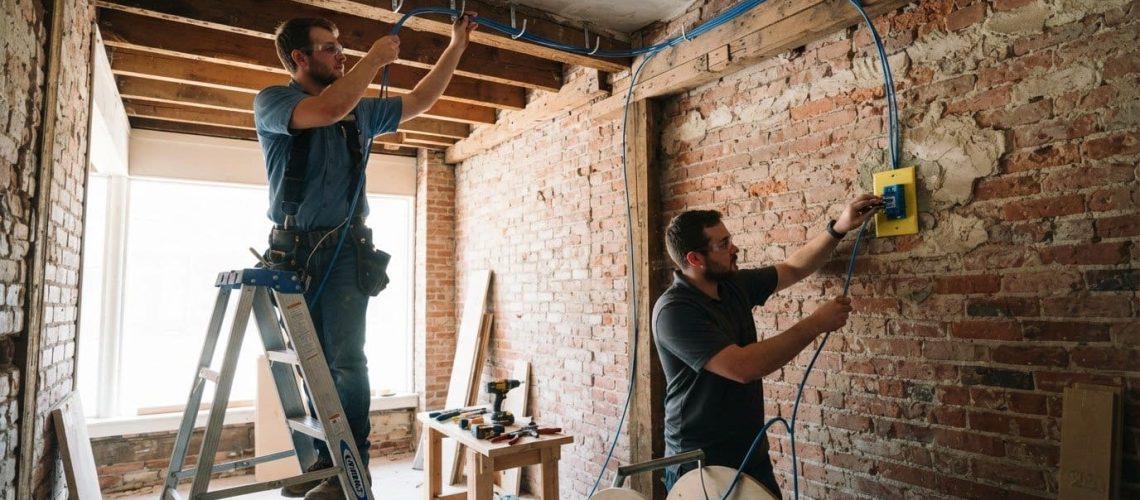
A reliable business network starts with cabling planned around the work happening on site. Commercial network cabling in Galena, IL, can include voice and data wiring, network upgrades, troubleshooting, and repairs for commercial and industrial spaces. The right approach depends on the building, the equipment in use, and the connections your team needs to keep daily operations moving.
It makes sense to want clear answers before changing wiring or addressing a network issue. Cabling decisions affect how devices connect today and how easily a site can adapt as its needs change. A useful plan considers the existing setup and the work the network needs to support.
This article explains what commercial and industrial cabling work can involve, how installation and repairs are approached, and what to consider when planning an upgrade. It also covers voice and data wiring, common troubleshooting needs, and local service options in Galena, so you can identify a practical next step for your business site.
Key Takeaways
- Learn how thoughtful cabling design, installation, testing, troubleshooting, and repair can support dependable business operations.
- See how structured cabling can organize voice and data connections across commercial and industrial spaces.
- Understand what local service availability means when planning cabling work for a Galena business site.
- Identify the building, equipment, and future technology needs that shape network upgrades.
- Explore how JOB Technologies’ Network Installation & Management can help businesses plan and manage their network cabling needs.
Cabling design, installation, troubleshooting, and repair
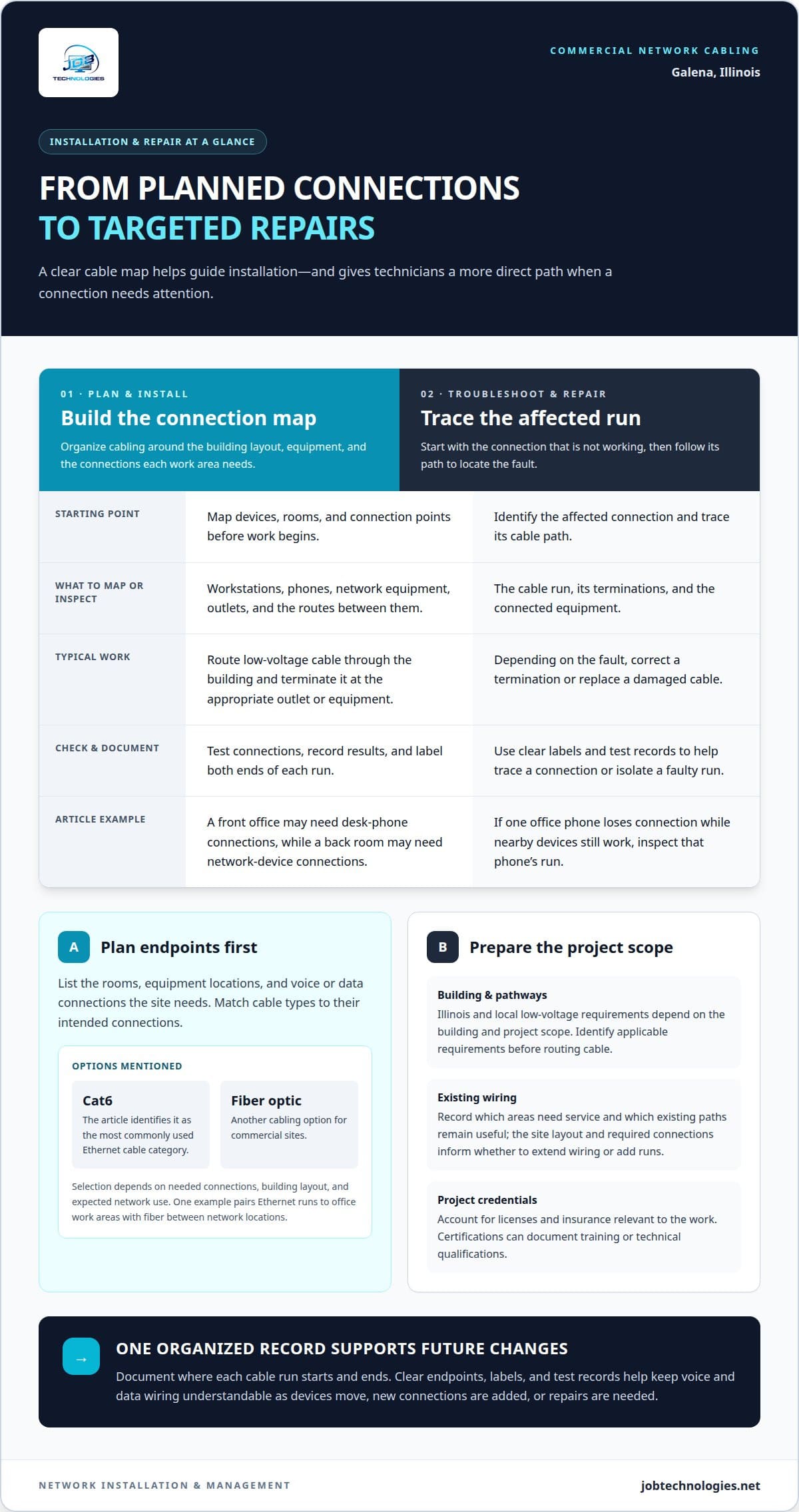
Commercial cabling work starts by mapping devices, rooms, and connection points. That plan guides installation and gives technicians a clearer path when troubleshooting or repairing a fault.
Commercial Cabling Installation
Structured cabling organizes connections for workstations, phones, network equipment, and other business systems. Low-voltage cabling installation can involve routing cable through a commercial building and terminating it at the appropriate outlets or equipment. The design should reflect the actual layout, such as a front office with desk phones and a back room with network devices.
Illinois and local code requirements for commercial low-voltage cabling depend on the building and project scope. Identify applicable requirements before routing cable, especially when the work affects building pathways or existing systems.
Cat6 and Fiber Optic Options
Cat6 is the most commonly used Ethernet cable category, according to Network Technology Innovations. Fiber optic cabling is another option for commercial sites. The right selection depends on the connections the business needs, the building layout, and how the network is expected to be used.
For a practical design, map each endpoint first, then match the cable type to its intended connection. A layout might use Ethernet runs to office work areas and fiber between network locations. Document where each run starts and ends to keep installation and future troubleshooting organized.
Workmanship and Testing
Good workmanship includes routing cables neatly, securing them appropriately, and labeling both ends so each run is easy to identify. After installation, technicians should test the connections and record the results. Clear labels and test records make it easier to trace a workstation connection or isolate a faulty run during future repairs.
Licenses, insurance, and certifications serve different purposes in a commercial cabling project. Planning should account for credentials and insurance relevant to the work, while certifications can document training or technical qualifications. Include these details in the project process alongside the scope and testing plan.
Troubleshooting starts by identifying the affected connection and tracing its cable path. For example, if one office phone loses its connection while nearby devices still work, technicians can inspect that cable run, its terminations, and the connected equipment. Depending on the fault, a repair may involve correcting a termination or replacing a damaged cable.
Telephone wiring installation also requires clear endpoints and careful testing. A phone system change may call for new runs, repairs to existing wiring, or updated connections at desks and equipment locations. Documenting each connection keeps voice and data wiring understandable as the site changes.
Commercial and industrial structured cabling
A structured cabling layout connects devices and work areas across a business site. For commercial network cabling in Galena, IL, the design should reflect how each space uses its network.
Business Network Cabling Services
Business network cabling services in Galena can include planning, installation, expansion, troubleshooting, and repair. The work connects network devices and work areas through an organized cabling layout, rather than treating every new connection as an isolated run.
Consider a business adding workstations in an office while keeping network equipment in a separate room. A cabling plan maps the endpoints and paths between them, giving each connection a clear purpose. It can also help identify where future devices may need access.
For a commercial site, the scope can cover new wiring, changes to existing connections, or both. An industrial space may need a plan that accounts for different work areas and the devices used in each. Start by defining which locations need voice or data connections.
Structured Cabling and Wiring
Structured cabling brings a site’s wiring into an organized system. For example, a business can map connections from work areas back to shared network equipment and label each cable by destination. This makes the layout easier to understand when devices move or a connection needs attention.
Commercial and industrial wiring plans should reflect how the building is actually used. A reception area, work floor, and equipment room may each need different connection points. Mapping these areas before installation helps ensure cable routes and endpoints support the way employees use their devices.
Structured cabling also provides a framework for connecting different types of equipment. A desk phone and computer, for instance, may both need connections in the same work area. Planning for both can help prevent scattered wiring and make later changes easier to organize.
In Illinois, the choice between extending existing wiring and installing new runs depends on the site layout and required connections. A clear scope records which areas need service and which existing paths remain useful. This keeps the work focused on the network’s actual needs.
Businesses planning commercial network cabling in Galena, IL can outline the rooms, equipment locations, and changes the cabling must support. That gives network installation support a clear starting point for organizing the site’s connections.
Local provider coverage and availability
For a business site in Galena, cabling work starts with the building location and project scope. Coverage and scheduling are separate considerations, so define the work before comparing service options.
Local Contractor Coverage
Commercial cabling work can involve new connections, network changes, or repairs in business spaces. In Galena, a project might cover an office, retail area, or industrial worksite. Describe the site type and areas involved to clarify which infrastructure the project needs to address.
Service coverage is location-specific. Galena businesses can describe their site address and the work area, while businesses in Dubuque, East Dubuque, Dyersville, Farley, or Peosta can identify their own location. Clear location details help define the project’s local scope without confusing a nearby directory listing with confirmed service availability.
To prepare for a quote, note the site address, building type, affected rooms, and work required. Include whether the project involves new infrastructure, existing wiring, troubleshooting, or planned expansion. For example, a retail business might need connections at a checkout area, while an office may need cabling changes after desks are moved.
Comparing Cabling Contractors
Compare contractors by their experience designing and implementing complex cabling solutions, as Smart Life advises. Also review how the project covers your site’s connected devices and work areas. A clear scope should explain which locations are included and what installation or repair work is planned.
Installation practices matter, too. Check that cables will be labeled and connections tested. A labeled connection serving a retail checkout is easier to identify during later troubleshooting than an undocumented cable. Clear test records also show what work was completed.
Review proposals against the same project details: locations, affected rooms, requested changes, and how completion will be documented. If a proposal covers both an office and a retail floor, make sure its scope describes both areas. Comparing equivalent work helps distinguish a complete plan from one that addresses only part of the request.
Consider future needs as well. If your business expects to add connected devices or rearrange work areas, ask whether the proposed infrastructure can accommodate those changes without major disruption. A useful comparison accounts for the building, current requirements, and likely technology changes.
Before requesting a quote, organize the Galena site address, rooms involved, network issue or upgrade, and any operational constraints. This concise project brief gives the scope a practical starting point and keeps the discussion focused on your business site.
A useful comparison accounts for whether listed providers can address the actual site and requested work. The BBB directory shows 92 Network Cabling Installation results near Enterprise, Illinois. That directory count is a search result, not confirmation that any particular contractor serves a Galena business or can take on a specific project. Treat listings as leads to verify directly: confirm the service location, the work included, scheduling, and the expected documentation before choosing a contractor. A focused check helps keep availability distinct from the number of directory results.
Network planning, design, and upgrades
A network upgrade works best when it addresses a defined business need. In a Galena office, that might mean preparing connections for relocated workstations, new equipment, or changes to how teams use shared spaces.
Start by inventorying the existing network. Record where internet service enters the building, where network hardware is located, and which areas depend on each connection. Then map the devices and work areas affected by the upgrade. Moving a team to another part of the building, for example, may require new connection points, while replacing one device may not require cabling changes.
Next, separate the internet connection from the building’s internal network. Galena internet plans include 5G, cable, fiber, fixed wireless, and satellite connections. Listed speeds range from 1.5 Mbps to 2 Gbps. Those options describe internet service, while a cabling plan addresses how devices connect within the site. Keeping these needs distinct helps focus the upgrade on the right infrastructure.
Plan for current use and likely changes. Choose cabling that can accommodate technology upgrades without major disruption or a complete overhaul. For instance, if your business expects to rearrange desks, include connection points for the new layout rather than routing cables only to existing desks.
Sequence the work to limit disruption to daily operations. Identify critical areas, such as a checkout station, office reception, or equipment room, and plan when each can be changed. A phased approach can keep unaffected spaces operating while work proceeds elsewhere. The project plan should also identify which existing connections will remain in service during each phase.
Before installation begins, document the planned changes: affected rooms, equipment locations, internet entry point, and connections to be added or moved. This gives the design a practical scope and distinguishes a cabling upgrade from hardware replacement, so each task has a clear place in the plan.
After the changes, test the affected connections and update the network records. If a workstation moves, its documented location should reflect the new connection. Clear records help technicians understand what changed and support future troubleshooting without retracing the entire site.
A sound upgrade plan links each cabling change to a business purpose. Whether the trigger is a new work area or a network redesign, matching the plan to actual device locations helps avoid unnecessary work and prepares the infrastructure for future changes.
Voice and data cabling
Voice and data connections serve different business needs, even when they share a work area. A reception desk, for example, may need a phone connection and network access for a computer. Planning both together helps place outlets where employees use devices and aligns cabling with the site’s daily work.
Begin by identifying each endpoint: desk phones, computers, printers, and network equipment. Then map which devices need wired access and where wireless coverage serves users instead. Wireless access can support mobile devices, while a wired connection may suit equipment that stays in one place. Base the design on actual work patterns, rather than assuming every device connects the same way.
For Ethernet cabling, Cat 6 is the most commonly used category, according to Network Technology Innovations. The suitable cabling choice still depends on the connection’s purpose and the site layout. A plan might map data connections for workstations separately from phone endpoints, even when both are installed near the same desk.
Telephone wiring installation should account for the phone system in use and where employees need service. Relocating a front-desk phone, for example, may involve changing its connection point and updating the cabling records. If a phone loses service, tracing its documented path can help narrow the issue to the endpoint, cable run, or connected equipment.
Voice and data cabling needs clear identification. Labels can show which room or device each cable serves, making later moves easier to manage. After installation or repair, a technician can test the affected connections and record the results. These steps help distinguish a cabling fault from a problem with a phone, computer, or network device.
If your business is adding wireless access, plan where the network connection will serve each access point. A site map of work areas and equipment helps position connections around the building’s use. Keep the wired infrastructure documented, too, so employees can identify which connection supports a device when plans change.
Voice and data needs can change as desks move, teams expand, or phone systems are updated. Review endpoint locations and current wiring before planning changes. For support coordinating cabling with ongoing network oversight, explore Managed IT Services.
JOB Technologies: Network Installation & Management
JOB Technologies provides Network Installation & Management for businesses planning cabling work, addressing network issues, or coordinating changes across a site. This is a practical next step when your cabling plan needs to fit the broader network setup and ongoing IT needs.
For example, a business relocating workstations may need to consider network connections alongside its existing systems. Managed IT Services support ongoing technology management, while Phone Systems VoIP address business phone needs. The right starting point depends on the work your site requires.
Share the business need, affected areas, and planned changes to begin a focused conversation. Contact JOB Technologies to discuss network installation and management for your business.
Set Your Business Network Up for What Comes Next
For commercial network cabling in Galena, IL, connect the project to your business goals. Look beyond an immediate repair or installation and consider how the network should support upcoming changes in daily operations, technology, and team workflows.
JOB Technologies provides Network Installation & Management for businesses planning network work, as well as Managed IT Services for ongoing technology needs. If your plans also include AI Implementation, consider that goal alongside network planning to keep technology decisions aligned.
Bring your priorities into a focused conversation, whether you’re planning a site change or addressing a network concern. Start a conversation with JOB Technologies about the next step for your business network. A clear plan can make it easier to move forward with confidence.
Frequently Asked Questions
What is the timeline and process for a commercial cabling project?
The project timeline depends on the amount of cabling, building access, and coordination with business operations. The process typically starts by defining the work and affected areas, then planning cable routes and scheduling installation. Technicians complete the agreed work and test the affected connections. At a busy site, coordinating access to offices, retail areas, or equipment rooms helps keep work organized.
What warranties and testing standards apply to commercial network cabling?
Warranty coverage depends on the project agreement and materials, so document the applicable terms before work begins. Define testing in the project scope, including which installed connections will be tested and how results will be recorded. Request test documentation and a process for addressing a failed connection. This gives your business a clear record to refer to if issues arise later.
Can older commercial buildings in Galena, IL, be upgraded with network cabling?
Older commercial buildings can be assessed for cabling upgrades by reviewing existing routes, access points, and the needs of current work areas. A building with limited pathways may need a different installation plan from a recently renovated office. An assessment can help determine which existing infrastructure remains useful and where new connections are needed. The same planning applies to business sites in Galena, Dubuque, East Dubuque, Dyersville, Farley, and Peosta.