
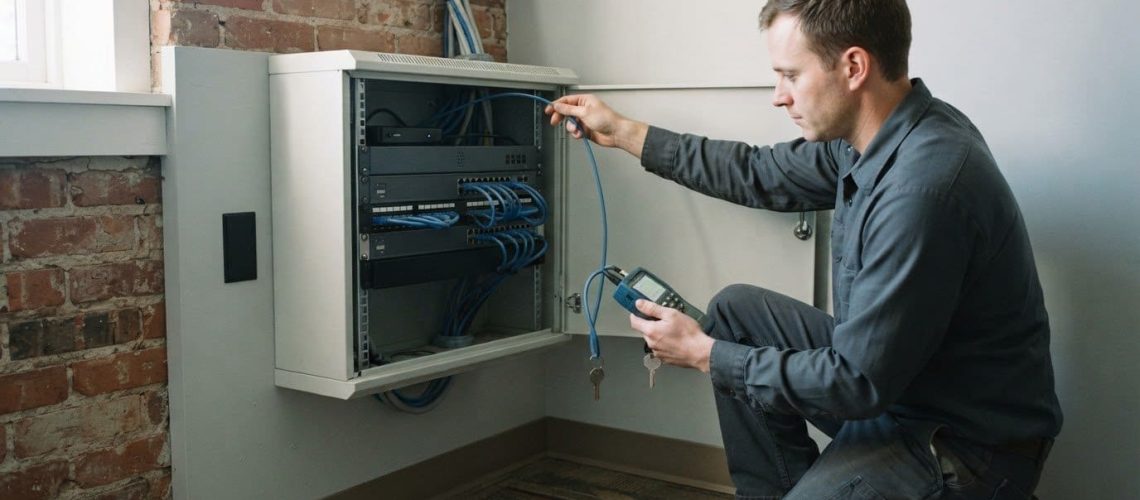
A security audit is most valuable when it turns hidden weaknesses into clear, prioritized work. A network security audit in Dubuque can identify exposed systems, outdated configurations, access gaps, and other risks before they grow into larger business problems.
Your IT staff may know your systems inside and out, and that knowledge is important. An effective audit also benefits from an independent perspective: professionals who do not manage the network can review its controls and traffic paths with fresh eyes.
This article explains what an audit can examine, how internal and external approaches compare, and how to turn findings into measurable remediation steps with assigned owners and validation. It also covers how asset discovery, configuration reviews, vulnerability scans, and manual checks fit into the process, and what to consider when planning an audit for your business.
Key Takeaways
- Understand how a thorough audit looks beyond devices to identities, endpoints, remote access, wireless networks, and cloud connections.
- Compare internal knowledge with an independent assessment to determine which approach can provide the clearest view of network risk.
- Turn findings into prioritized remediation work by assigning owners and defining how fixes will be validated.
- See how asset discovery, configuration reviews, vulnerability scanning, traffic analysis, and manual checks work together.
- Plan an audit around your network changes, business processes, and reporting needs so the results support practical next steps.
What are the benefits of network security auditing?
A network security audit helps an organization identify exposed systems, weak controls, and policy gaps before attackers exploit them. Its value comes from reviewing technology, access, and operating practices together, then showing where improvements can reduce risk.
Audit coverage across connected systems
A useful assessment maps the network beyond the main office router. It can include firewalls, switches, servers, endpoints, wireless networks, remote connections, and cloud-connected systems. Auditors also review identities and permissions, including whether staff accounts provide access to the systems people need for their roles. For each device, the inventory should record details such as hostname, IP address, serial number, configuration, and software version.
Before fieldwork, the organization provides authorization, network diagrams, inventories, and appropriate access. Change history helps explain why a configuration differs from a diagram, while relevant logs show how systems behave. Together, these materials establish a practical baseline and help uncover forgotten devices or unapproved connections.
Exposure revealed by common findings
Audits often uncover unpatched systems, outdated firmware, overly broad access rules, weak network segmentation, and logging gaps. For example, a former project device might still connect to the network, or a broad firewall rule might allow more traffic than its business purpose requires. Each finding needs context: an exposed system connected to sensitive data presents a different risk from an isolated device.
Reviewers compare the approved design with actual configurations and traffic paths. They also check whether network components are still supported by their vendors and whether security patches are current. This helps distinguish a documented exception from an unnoticed weakness and prioritize work that reduces meaningful exposure.
Monitoring and access safeguards
Monitoring is useful only when it provides visibility into relevant activity. An audit checks whether firewalls, servers, and other necessary sources generate logs and whether those records reach a centralized log server. It can also review intrusion detection and prevention systems, including whether alerts and protections match the network’s traffic paths.
Access safeguards cover digital permissions as well as physical entry. Auditors can review user accounts, group memberships, credentials, and access rules, alongside controls for doors and equipment areas. A practical check is whether a person’s network privileges and building access still match their current responsibilities.
How much does a network security audit cost in Dubuque? The price depends on the scope, network complexity, systems reviewed, and reporting needs. A needs assessment helps define the work and establish the price.
How often should a business conduct a network security audit? The article recommends auditing at least annually and after major changes or security incidents. High-change environments may need quarterly audits to keep the assessment aligned with evolving systems and connections.
Should You Use Internal or External Audits?
Both internal and external assessments can reveal threats, but independence and access shape what each one detects. Choose an approach that examines the network objectively and fits your organization’s needs.
Internal and external assessment options
An internal team understands the organization’s systems, change history, and business priorities. That knowledge helps explain unusual configurations, but staff who manage the network should not assess it alone. Network security audits should be conducted by IT professionals with security and network management backgrounds who are independent of the systems under review.
An external assessor brings an independent perspective and can challenge assumptions that routine operations leave untested. Either approach should define scope, authorization, access, reporting, and validation before testing begins. Some organizations combine internal context with an independent assessment, giving reviewers both operational detail and distance from daily network management.
Network audit provider selection
When choosing an audit provider, look for professionals with network management and security backgrounds. Confirm that the assessment covers your actual environment, including internet-facing connections, remote access, and relevant cloud systems. Ask how findings will be documented, prioritized, assigned, and validated. These details show whether the work will produce practical next steps rather than just a scan summary.
Define authorized boundaries before the assessment begins. Identify which systems can be tested, the approved testing window, and who can respond if unexpected effects arise. A written scope aligns expectations, protects business operations, and distinguishes authorized testing from activity outside the engagement.
Physical entry can affect network security. An audit can consider how guest check-in records visitors and how a video intercom connects to building systems or network services. Reviewers can examine who receives access credentials, how permissions are granted, and whether former users still have access. These checks connect physical access practices with the organization’s wider security controls.
Internal and external approaches can also differ in how they identify threats. An internal assessment may draw on firsthand knowledge of approved exceptions, maintenance routines, and system owners. An independent assessor can challenge whether those exceptions still serve a business purpose. In either case, findings should explain the affected systems and relevant risks, not simply label a configuration as weak.
Before choosing an approach, decide what you need to learn. A business reviewing a recent network redesign may prioritize an independent assessment of changed boundaries and connections. An organization seeking better visibility into established processes may value internal context alongside an independent review. The key is to separate assessment from responsibility for managing the systems under review.
Agree on a clear closeout process, too. The assessor should present findings to the people responsible for security, IT operations, and affected business functions. A useful discussion separates urgent exposure from longer-term improvements and identifies evidence needed to validate fixes. This gives decision-makers a shared basis for assigning remediation while keeping daily operations in view.
Risk-ranked findings and measurable remediation
An audit report should help decision-makers move from technical observations to risk management. Clear priorities, accountable owners, and validation steps make remediation part of an ongoing cybersecurity process.
Risk-rated findings
Each finding should explain what failed, what could happen, which systems or people are affected, and what remediation requires. Risk ratings help prioritize findings by considering exposure, business impact, and the role of the affected infrastructure. For example, a weakness on a path to sensitive business systems may need attention before an isolated issue.
A useful report explains the context behind each rating rather than presenting a label alone. It connects the technical condition to a plausible consequence, such as unauthorized access or service disruption. This helps leaders weigh security exposure against operational needs and focus on findings that could lead to compromise.
Risk ranking also supports decisions when several teams share responsibility. A finding involving a business application, network configuration, and user permissions may require coordinated action. The report should identify those dependencies so the organization can address the underlying cause, not just the visible symptom.
Measurable remediation and post-audit support
Every priority finding should have a remediation owner, a defined action, and a validation step. For example, an owner might revise a rule, document the approved configuration, and arrange a review to show that the unintended access path is closed. Validation turns “fixed” into evidence that the intended control works.
Post-audit support can clarify technical findings, help sequence remediation, and assess changes against the original risk. If an upgrade depends on a vendor-supported device or a scheduled infrastructure change, the plan should state that dependency. The report can separate immediate risk reduction from work that requires operational planning.
To make remediation measurable, track each finding in a consistent record: risk and affected systems, accountable owner, agreed action, target milestone, and validation evidence. These fields show whether work is open, underway, or complete without relying on informal updates. They also give managers a practical basis for discussing unresolved exposure with responsible teams.
Risk management continues after individual fixes. A control change can affect connected systems, permissions, or monitoring, so validation should consider the intended result and any relevant side effects. For example, after restricting access to an administrative function, a review can confirm that authorized staff still have the access they need. This keeps remediation aligned with business operations.
Reports are more useful when findings are presented in language suited to each stakeholder’s decisions. Technical teams need the affected configuration and corrective action; business leaders need the impact, priority, and ownership. A shared record helps the organization track progress, maintain accountability, and carry unresolved risks into its next planning cycle.
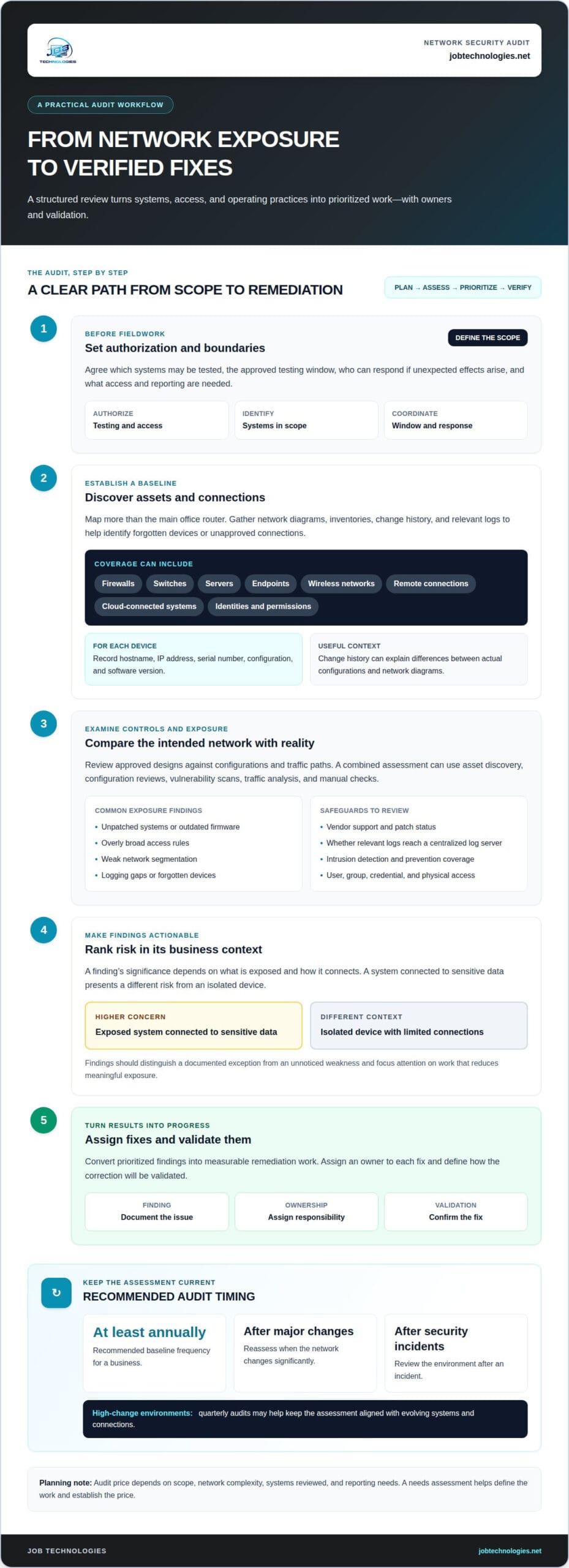
Audit methods: asset discovery, configuration review, scanning, traffic review, and manual validation
A network audit evaluates assets, configurations, processes, and risk across the environment. A vulnerability scan detects known weaknesses, while a penetration test attempts to exploit weaknesses to demonstrate impact, often along a narrower attack path.
Asset discovery and configuration review
Asset discovery builds a working picture of the network by identifying connected devices and comparing them with available records. The auditor uses inventory tools and network information to spot unknown systems, duplicate entries, or equipment missing from the documented environment. This comparison improves visibility and helps ensure the assessment covers the infrastructure actually in use.
Configuration review examines how devices are set up, not just whether they respond to a scan. An auditor can compare firewall rules, switch settings, and server configurations with approved business needs. For example, a rule allowing broad traffic may need review if its documented purpose applies only to a specific system or function.
Reviewers also consider device support status, patch levels, and consistency across configurations. A network device that no longer receives vendor support presents a different concern from a supported device with a missed security update. The assessment records each condition and its context so findings reflect practical exposure.
Scanning, traffic review, and manual validation
Vulnerability scanning checks network systems for known security issues and weaknesses. It can identify exposed services or software that needs attention, but scan results still require interpretation. Auditors assess whether a detected issue applies to the device and whether surrounding controls affect its risk.
Traffic review adds context by examining communication paths between systems and network boundaries. Reviewers can compare observed connections with the organization’s approved design and look for unexpected routes. This helps establish whether a firewall or segmentation control behaves as intended, rather than relying only on its written configuration.
Manual validation helps confirm whether automated findings reflect real conditions. An auditor can inspect a reported setting, compare it with the device configuration, and review relevant logs. If a scan identifies a potentially exposed service, manual review can determine which system runs it and whether the connection is expected.
These methods work best together. Asset discovery defines what should be assessed, configuration review examines how controls are set, and scanning highlights known weaknesses. Traffic analysis and manual validation then test whether findings match actual network behavior. Combining these methods can reveal gaps a single scan may miss.
After a security incident or major network change, the same methods can help determine whether defenses and documented network paths still align. The resulting report should link each verified observation to affected systems and explain what further review or remediation is needed.
Audit planning, assessment, reporting, and remediation
A well-planned assessment gives the auditor clear boundaries and the organization useful, actionable results. Scope, access, business priorities, and reporting expectations shape every stage.
Planning and assessment stages
Planning defines the network, systems, locations, and business processes included in the assessment. The auditor agrees on authorization, access, timing, and contacts for operational questions. Relevant diagrams, inventories, policies, and change records help establish how the environment should work.
During the assessment, reviewers examine configurations, accounts, encryption practices, and processes such as incident handling and disaster recovery. They can also consider how physical access and network upgrades are managed. The National Institute of Standards and Technology Cybersecurity Framework offers a reference for aligning security assessment work.
Good planning accounts for operational dependencies, not just technology. For example, an assessment of a firewall change should consider which business services rely on its rules and who approves updates. Clear boundaries also distinguish authorized testing from activity that could interrupt normal operations.
Reviewers compare written policies with actual practice. A password policy may require rotation every 90 days, while system settings or staff routines differ. This comparison reveals whether procedures work as intended and whether access levels match users’ roles. The assessment should also consider how configuration management, network upgrades, and incident response are handled.
Audit reporting and remediation
The report should explain what failed, what could happen, who or what is affected, and what remediation requires. Findings are more actionable when they include risk rankings, remediation owners, and validation steps. For example, a report can assign a network control change to an owner and specify evidence that demonstrates the correction.
Stakeholders can use the report to sequence work, communicate operational impact, and track progress. Remediation might involve changing a control, updating a procedure, or planning an upgrade. Validation checks that the fix addresses the finding without disrupting business functions that depend on the system.
Reporting should separate technical detail from business impact without losing the connection between them. Technical teams need enough configuration detail to understand the issue, while decision-makers need its operational implications. A clear explanation helps both groups agree on priorities and plan resources.
Follow-up can assess whether corrective actions are complete and whether remaining exposure requires further planning. Share relevant findings with stakeholders responsible for security, IT operations, and affected business processes. To turn assessment results into a practical next step, plan your network assessment.
Audit duration
Audit duration depends on scope and environmental complexity, access readiness, review depth, and reporting needs. A focused assessment of defined systems involves different work from a review across multiple network segments, cloud connections, and business processes.
Preparation can keep the work moving: agreed authorization, current diagrams, available system access, and responsive subject-matter contacts help auditors resolve questions efficiently. Manual validation and stakeholder review also affect the schedule because findings must be understood and reported clearly.
JOB Technologies: Network Installation & Management
JOB Technologies provides Network Installation & Management to help businesses address network changes identified during an audit. When findings point to infrastructure updates, configuration needs, or network management work, this service can support the practical steps that follow an assessment.
For example, an organization may need to plan network changes around business requirements, coordinate connected systems, or improve network management. JOB Technologies also offers Managed IT Services for ongoing technology management, along with Cybersecurity & Ransomware Protection for related security needs.
A clear audit report gives you a useful starting point: the affected systems, the risk, and recommended next steps. Share those priorities with JOB Technologies to discuss how network installation or management can fit your business needs.
Contact JOB Technologies to discuss your network needs.
Make your next security decision count
A network security audit in Dubuque can be a starting point for more deliberate technology planning. Use the findings to connect security priorities with upcoming infrastructure decisions, operational needs, and the systems your team relies on each day. This helps keep risk reduction relevant as your business changes.
JOB Technologies can support next steps through Network Installation & Management and Managed IT Services. Its AI Implementation offering may also fit if your technology plans include bringing AI into business operations. The right path depends on what your organization needs to address and how those priorities fit its goals.
You don’t need to solve every technical question before starting a conversation. Share the business priorities behind your audit, and discuss a practical direction for the work ahead. Start a conversation with JOB Technologies about your network needs.
Clear priorities make the next step easier. Move forward at a pace that supports your operations and keeps security in the plan.
Frequently Asked Questions
How Do Professional Auditors Help Turn Audit Findings Into Action?
Professional auditors translate technical issues into decisions teams can assign and track. They explain the affected business function, the potential consequence, and what evidence would demonstrate a fix. For example, if an access change affects a finance application, the report can identify the system owner and describe a validation check. This helps managers coordinate technical work with department needs and keep unresolved risks visible.
Why Are Emerging Threats Making Network Audits More Important?
Changing attack methods make it useful to reassess whether existing controls still fit current systems and connections. A business adding cloud applications or remote access, for example, may create paths that older policies never addressed. An audit examines those changes alongside established controls. Regular reviews also give decision-makers a structured way to consider new exposure instead of relying on assumptions about how the network operates.
What does a network security audit include?
A network security audit examines whether technology, access, and operating practices work together to protect business systems. Its scope can include firewalls, servers, endpoints, wireless connections, remote access, cloud services, identities, and security policies. It may also review how network changes are approved and incidents are handled. The scope should reflect the organization’s systems, business processes, and security concerns.
Which companies provide network security audits in Dubuque, Iowa?
JOB Technologies serves businesses in Dubuque and nearby Galena, East Dubuque, Dyersville, Farley, and Peosta. Relevant offerings include Network Installation & Management, Managed IT Services, and Cybersecurity & Ransomware Protection. These services support businesses addressing network security needs and planning follow-up work. Share your environment and priorities with JOB Technologies to discuss a suitable next step.
What standards and regulations apply to network security audits for Iowa businesses?
Applicable standards depend on an organization’s industry, data, contracts, and compliance obligations. Examples include System and Organization Controls (SOC), North American Electric Reliability Corporation Critical Infrastructure Protection (NERC CIP), and Payment Card Industry Data Security Standard (PCI DSS). PCI DSS requires segmentation controls to be tested at least annually, and every six months for service providers. The NIST Cybersecurity Framework is another reference organizations may use for alignment.
What steps does a professional follow in a network security audit?
A professional begins by defining scope, authorization, access, and business contacts. The assessment then gathers relevant network records and reviews systems, configurations, policies, and activity. The auditor validates observations, considers their potential business impact, and documents findings for stakeholders. This supports remediation planning, including assigning responsibility and identifying evidence that shows whether corrective work addressed the issue.
What should a business do after receiving a network security audit report?
Start by reviewing the findings with the people responsible for security, IT operations, and affected business systems. Assign an owner to each action, identify dependencies, and agree on evidence that will demonstrate completion. For example, an application owner may need to coordinate a change with the network team. Track open items and include unresolved risks in business planning until they are addressed or actively managed.